Key Takeaways
- Exosomes are tiny particles that carry growth signals to hair follicles. Early studies show real gains in density and thickness, but there is not yet strong long-term proof they outperform established treatments.
- Secretomes carry a broader mix of growth factors than solely exosomes. Limmer HTC does not offer exogenous exosome injections right now, but our team is testing autologous secretome-based protocols as this research area matures.
- If you are weighing exosome therapy against proven options like FUE, FUT, minoxidil, finasteride, or PRP, a consultation with Limmer HTC can help you sort real evidence from marketing claims.
Exosome therapy for hair loss uses tiny particles called exosomes to send growth signals to your hair follicles. The goal is to wake up weak or resting follicles and support thicker, healthier hair, without surgery.
It has become one of the most talked about treatments in hair restoration this year. But talked about is not the same as proven. Here is what exosomes actually are, what the science says so far, and where we stand on using them.
What Is Exosome Therapy for Hair Loss?
Exosomes are extracellular vesicles, which is just a science word for tiny bubbles that cells release into their surroundings. Each bubble carries a small cargo of proteins, fats, and RNA, a molecule that acts like a genetic instruction sheet. Think of exosomes as couriers. They pick up a package of signals from one cell and deliver it to another, telling that cell to act differently.
When exosomes reach a hair follicle, they can deliver signals that encourage the follicle to grow instead of rest. Most exosome-based products or treatments used in clinics are made from donor mesenchymal stem cells, often sourced from placental or umbilical cord tissue, then processed and concentrated in a lab. While some products are plant-derived, the majority demonstrating early evidence are human-derived products.
These treatments are different from PRP, or platelet-rich plasma, which uses your own blood. A provider draws your blood, spins it in a machine, and injects the concentrated platelets back into your scalp. Interestingly, PRP does contain billions of your own exosomes! Stem cell therapy is also distinct from exosome products, as stem cell protocols use whole living cells instead of just the signalling molecules those cells release.
How Exosome Treatments Are Given
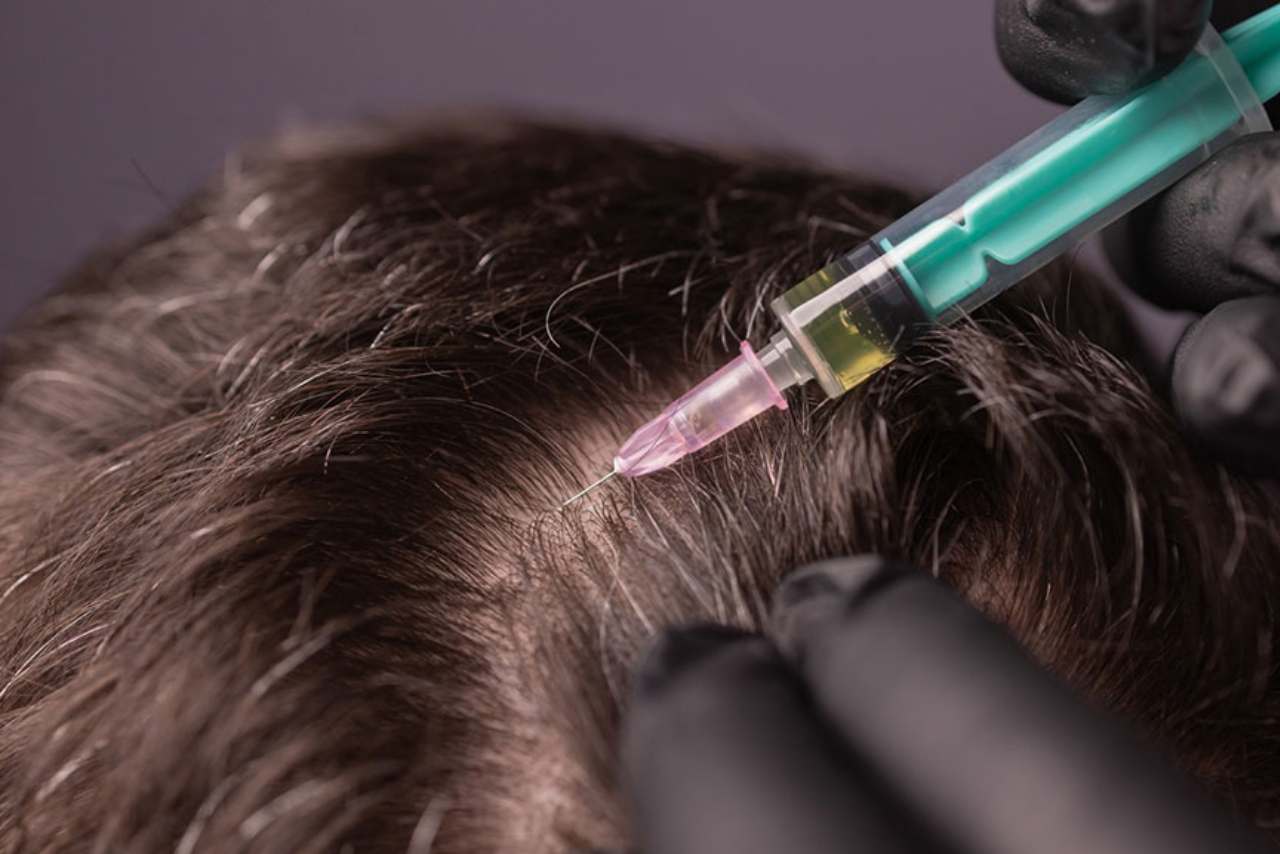
Exosome treatments can be delivered in a variety of ways – through small injections directly into the scalp, via microneedling channels, or topically. Some clinics combine exosome therapy with other hair loss treatments, and depending on method of delivery, numbing may be required.
What Does the Research Actually Show?
The honest answer is that exosome therapy shows promise, but the evidence is still young. Several small studies report real gains, with hair density increasing by roughly 9.5 to 35 hairs per square centimeter and hair shafts growing thicker in some patients. Reported side effects in studies have been mild; however, the FDA has issued multiple warnings regarding exosome products due to serious adverse events related to exosome-containing treatments. Exosomes as widely referenced are unregulated human products, which carry inherent risks, most of which relate to transmission of infections.
That said, no exosome or secretome product carries FDA approval for any indication, including hair loss. Most published studies are small, run for less than a year, and rarely compare exosome therapy head-to-head against proven options like minoxidil or finasteride. A systematic review of the clinical evidence published in Clinical, Cosmetic and Investigational Dermatology found the early results encouraging but called for larger, better-controlled trials before exosome therapy earns a place as a first-line treatment. Ongoing government-registered research, including a trial examining plant-derived exosomes tracked on ClinicalTrials.gov, is working to close that gap.
In plain terms, if a clinic promises exosome therapy will regrow a full head of hair, be skeptical. The current evidence supports it as a promising area of research, not a guaranteed cure.
Exosomes vs. Secretomes: What Is the Difference?
| Exosomes | Secretomes | |
| What it is | Tiny particles cells release, carrying proteins, fats, and RNA (genetic instructions) | A broader set of everything a cell secretes, including growth factors, cytokines, and proteins |
| What it targets | Delivers specific signals directly to follicle cells | Supports the whole scalp environment, including circulation and inflammation |
| Evidence stage | Small clinical studies, mostly published in the last two years | Earlier stage, with clinical trials just getting underway |
| Limmer HTC’s approach | Not currently offered | Being tested in a research capacity |
Secretomes are sometimes described as the broader, more holistic sibling of exosome therapy. Because a secretome includes a wider mix of healing compounds, some researchers believe it may support the whole scalp environment rather than targeting isolated cells. Like exosome therapy, secretome therapy is still investigational, meaning it is being actively studied and is not an FDA-approved treatment for hair loss.
Curious whether a hair transplant is right for you?
Our doctors have been restoring hair in San Antonio since the 1990s. Get honest answers about your options in a consultation.
Schedule a ConsultationOr call (210) 496-9992
Where Does Limmer HTC Stand on Exosome Therapy?
We get asked about exosome therapy often, so we want to be direct about it. Here at Limmer HTC, we do not currently offer exosome injections as a hair loss treatment. We looked closely at the available research and decided the evidence is not yet strong enough for us to recommend it as a standard option.
What we are doing instead is exploring an autologous secretome-based therapy in a research capacity, watching closely as new clinical trial data comes in. If the evidence holds up, we will let our patients know. Until then, we continue to routinely recommend treatments with a longer track record.
Those proven options include FUE and FUT hair transplants, medical therapies like minoxidil and finasteride, and platelet-rich plasma injections. Every patient’s plan is different, and the right mix depends on your hair loss pattern, budget, and goals.
Is a Non-Surgical Option Right for You?
Non-surgical treatments, whether secretome therapy, PRP, or medical therapy, tend to work best for people in the earlier stages of hair loss, where follicles are thinning but not gone. If you want to see where you stand, check our guide to the Norwood Scale to get a sense of your hair loss pattern and stage.
If you are further along, surgical hair restoration remains the most reliable way to restore real density. Non-surgical treatments can support a transplant or slow further thinning, but they cannot replace follicles that are already gone.
The best next step is a real conversation with someone who can look at your scalp, your goals, and your budget, and tell you honestly what will and will not work.
Frequently Asked Questions
Is exosome therapy FDA-approved for hair loss?
No. As of 2026, no exosome or secretome product has FDA approval for any indication, including hair loss. Clinics that offer it are using it as an investigational or off-label treatment.
Is exosome therapy the same as PRP?
No. PRP uses your own blood, spun down to concentrate its platelets. PRP ultimately includes billions of your own exosomes. Purely exosome-based therapies typically use lab-processed particles from donor tissue or plants. Both aim to support hair follicles, but they work through different mechanisms and safety implications.
How much does exosome therapy for hair loss cost?
Cost varies by clinic and by how many sessions you need. Because we do not currently offer exosome therapy, we recommend requesting pricing directly from any clinic offering it and comparing that cost against our transparent hair transplant pricing.
How long do results from exosome therapy last?
This is still being studied. Most published studies only follow patients for a few months to about a year, so there is not yet solid data on how long any hair growth gains last without repeat treatments.
Does Limmer HTC offer exosome injections?
Not at this time. Our team is following the research and experimenting with autologous secretome-based approaches, but we currently routinely recommend established treatments with a stronger evidence base.
Talk to Limmer HTC About Your Options
Hair loss treatment should be based on real evidence and safety, not trends. If you want an honest, experienced opinion on what will actually work for your hair, contact Limmer Hair Transplant Center to schedule a consultation. Our San Antonio team will walk you through every proven option, from medical therapy to surgical hair restoration so that you can make a decision with confidence.