Key Takeaways
- The strongest evidence for rosemary oil is one 2015 trial of 100 adults, where it matched 2% minoxidil for hair count after six months.
- Rosemary oil must be diluted in a carrier oil, used two to three times a week, and given at least six months before you judge results.
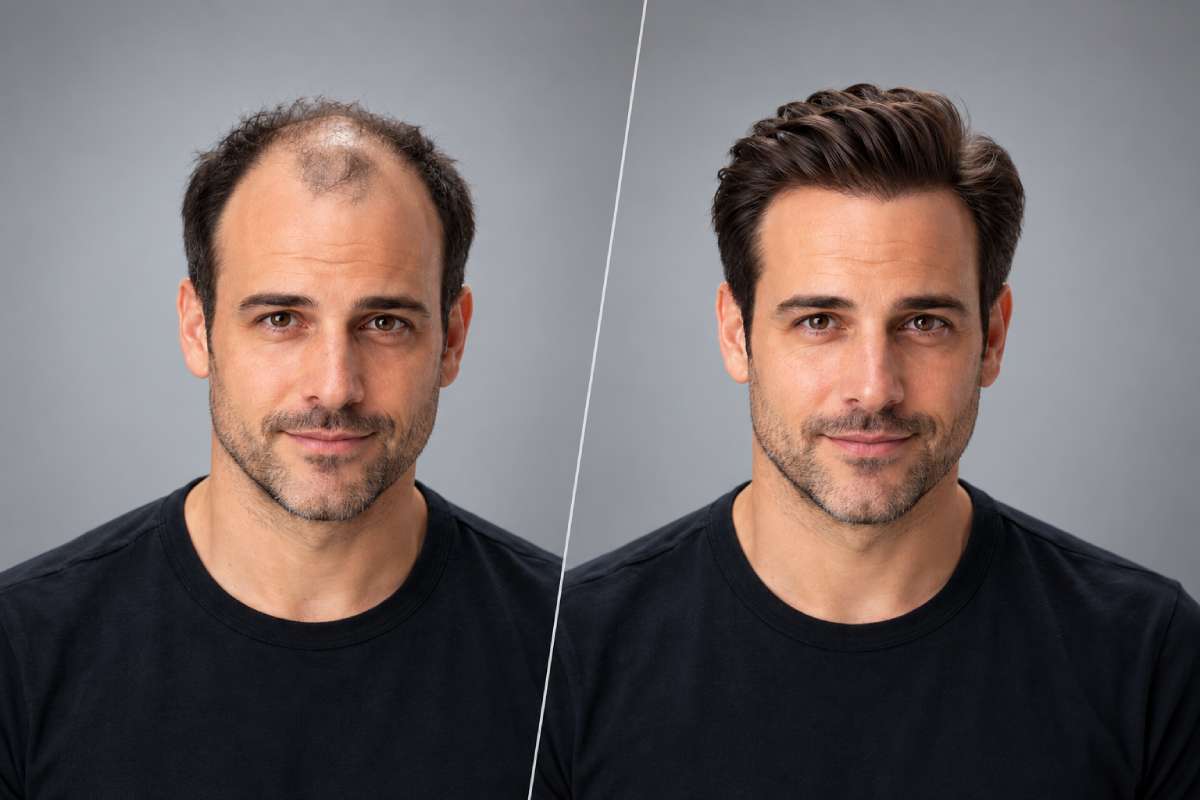
- Rosemary oil can support thinning hair, but it cannot regrow hair on a smooth bald scalp, where a transplant is the only real fix.
Rosemary oil for hair growth has real research behind it, but that research is limited. One small study from 2015 found rosemary oil worked about as well as 2% minoxidil after six months, but this experiment has not been repeated in a larger trial. So, while rosemary oil may help mild thinning, it will not bring hair back to a scalp that is already smooth and bald.
Does Rosemary Oil Actually Work for Hair Growth?
Rosemary oil shows modest promise for pattern hair loss, with the strongest evidence coming from a single 2015 study of 100 adults. In it, rosemary oil matched 2% minoxidil for hair counts at six months. However, no large trial has confirmed that result since, so it’s hard to say if rosemary oil is actually worth trying for hair regrowth.
What the 2015 Rosemary Oil vs. Minoxidil Study Found
The study that compared rosemary oil to 2% minoxidil was published in the journal Skinmed in 2015 by Panahi and colleagues. It included 100 adults with androgenetic alopecia, which is just the medical name for pattern hair loss. Half used rosemary oil on the scalp, while half used 2% minoxidil, an over-the-counter hair growth liquid.
Both groups had more hair at the six-month mark than they did at the start of the study. Neither group saw much change at three months. The rosemary group also reported less scalp itching than the minoxidil group, though both groups reported more itch than at baseline. This study is the whole basis for the viral claim you may have seen on TikTok recently.
Where the Rosemary Oil Research Falls Short
One study is a starting point, not proof. Here is what that trial could not tell us:
- It had no placebo group, which eliminates the ability to control for any natural, time-related improvement in hair counts or any unintended contributors to results, such as massaging in the topical product. In other words, if scalp massage alone led to increased hair counts, this study design would not be able to show that.
- It compared rosemary oil to 2% minoxidil. The 5% strength is what most doctors actually recommend today, as it has repeatedly been shown to be more effective than the 2% formulation.
- It followed only 100 people at one site for six months. It also appears to only have included male patients. Hair loss is a lifelong condition that affects both men and women.
- Rosemary oil contains multiple bioactive compounds. Ongoing investigations of rosemary oil for various conditions suggest that specific isolates may contain more benefit than others.
How Does Rosemary Oil Work on the Scalp?
Rosemary oil appears to by improving blood flow to hair follicles and calming inflammation. By having better circulation, this may bring more oxygen and nutrients to the follicles, which can help stimulate growth. Rosemary also has antioxidant and antimicrobial effects that may keep the scalp healthier.
This is loosely similar to how minoxidil is thought to work. Minoxidil widens blood vessels in the scalp and stretches out the growth phase of each hair. If you want more information on that drug, our guide to minoxidil and how it works walks through the details.
In mouse , rosemary oil was also shown to have antiandrogenic properties via inhibition of 5-alpha reductase (5-ARI). 5-ARI inhibition reduces dihydrotestosterone (DHT) production. DHT is the hormone that shrinks susceptible hair follicles in pattern hair loss. Thus, rosemary oil has the potential to benefit individuals experiencing thinning hair by acting on the same pathway as finasteride and dutasteride.
How Do You Use Rosemary Oil the Right Way?
Rosemary essential oil is far too strong to put on your scalp straight from the bottle. Mix it into a carrier oil first, at roughly a 1% to 2% strength. That is about 2 or 3 drops of rosemary oil per tablespoon of carrier oil. Jojoba, coconut, and argan oil all work well.
- Patch test first. Put a little of the mix on your inner forearm and wait 24 hours.
- Mix 2 to 3 drops of rosemary oil into 1 tablespoon of carrier oil.
- Massage it into your scalp, not just your hair, for about 2 minutes.
- Leave it on for at least 10 minutes. Overnight is fine if your scalp tolerates it.
- Wash it out with a gentle shampoo.
- Repeat 2 to 3 times a week, and keep going for six months before you judge results.
Never apply undiluted rosemary oil to your skin. It can cause burning, redness, and dermatitis. Irritated skin can make shedding worse, which is the opposite of what you want. Stop right away if your scalp turns red or sore.
Curious whether a hair transplant is right for you?
Our doctors have been restoring hair in San Antonio since the 1990s. Get honest answers about your options in a consultation.
Schedule a ConsultationOr call (210) 496-9992
Rosemary Oil vs. Minoxidil: Which One Should You Use?
Minoxidil has decades of research and FDA approval. Rosemary oil has one small trial and a potentially gentler side effect profile if used appropriately. If your only goal is the best odds of regrowth, minoxidil wins. If you cannot tolerate minoxidil, rosemary oil is a reasonable thing to try. Here is how they compare.
| What You Are Comparing | Rosemary Oil | Minoxidil (Rogaine) |
| FDA approved for hair loss | No | Yes |
| Quality of evidence | One small trial of 100 people, plus lab studies | Dozens of trials, including one with 984 men |
| How often you use it | 2 to 3 times a week, forever | Once or twice daily, forever |
| Common side effects | Scalp irritation if used undiluted | Itching, dryness, early shedding |
| Time to see results | About 6 months | 4 months, with full results at 12 to 14 months |
| Works on a smooth bald scalp | No | No |
When Rosemary Oil Will Not Be Enough
Rosemary oil works on follicles that are still alive. Once a follicle is gone, no oil, pill, or serum can bring it back. The skin there will look smooth and shiny with no fine hairs at all. Our article on the Norwood scale shows how doctors chart how far pattern hair loss has gone.
As a rough rule, rosemary oil is worth a try for early thinning where you can still see fine, wispy hairs. It is not worth your time on a fully bare crown or a deeply receded hairline. In those cases, you are delaying a real solution.
Women often ask if the same rules apply to them. They mostly do, though women tend to thin all over instead of going bald in limited and predictable areas, which can make topical treatments more challenging.
What Should You Do If Rosemary Oil Is Not Working?
Give rosemary oil a fair six months, then get a real diagnosis. Sudden shedding can come from thyroid problems, low iron, stress, or medication changes, and those need different treatment. A dermatologist can check your scalp under magnification and run bloodwork. Guessing wastes months you could spend on something that works.
If pattern hair loss is confirmed, you then have proven options. Minoxidil and finasteride can slow the process. Scalp micropigmentation can also add the look of density without surgery.
For more permanent results, a transplant moves your own hair from the back of your scalp to the thin areas. Our breakdown of FUE vs. FUT explains the two main techniques, and our hair transplant pricing page lists real numbers.
Frequently Asked Questions
How long does rosemary oil take to work on hair?
Plan on six months. In the 2015 trial, neither the rosemary group nor the minoxidil group showed meaningful change at the three-month mark. Hair grows about a quarter to a half inch per month, so any new growth takes time to become visible. If you see nothing at all by six months, it is time to talk to a doctor.
Can rosemary oil regrow a receding hairline?
It is very unlikely. A receding hairline usually means those follicles have already shrunk down or died off. Rosemary oil can only support follicles that are still producing hair. If the skin along your hairline is smooth with no fine hairs, a hair transplant is the only method that reliably restores hair there.
Is it safe to use rosemary oil and minoxidil together?
Most people can, but consider staggering them. Apply minoxidil to a dry, clean scalp as directed. Use your rosemary oil mix on a different day, or hours later, and wash it out. Layering oil on top of minoxidil can block absorption and increase irritation. Ask your dermatologist before combining any two scalp treatments.
Does rosemary oil cause shedding at first?
Some people report light shedding in the first few weeks. This is usually the scalp massage loosening hairs that were already on their way out. Heavy or ongoing shedding is not normal and often points to irritation from an oil that was not diluted enough. Stop use and check in with a doctor if it continues.
Which carrier oil works best with rosemary oil?
Jojoba oil is the easiest starting point for most people, especially with fine or oily hair. Argan and sweet almond oil suit drier hair well. Coconut oil is popular and inexpensive. Castor oil is very thick, so use it sparingly. The carrier matters less than the dilution, so keep rosemary oil at 1% to 2%.
Talk to a San Antonio Hair Restoration Team You Can Trust
Rosemary oil is cheap and low risk, so trying it makes sense for early thinning. Just do not let it cost you years. The sooner you know what is causing your hair loss, the more options you have.
Our team has been restoring hair in San Antonio since the early 1990s. Contact Limmer Hair Transplant Center for an honest look at where you stand and what will actually help.