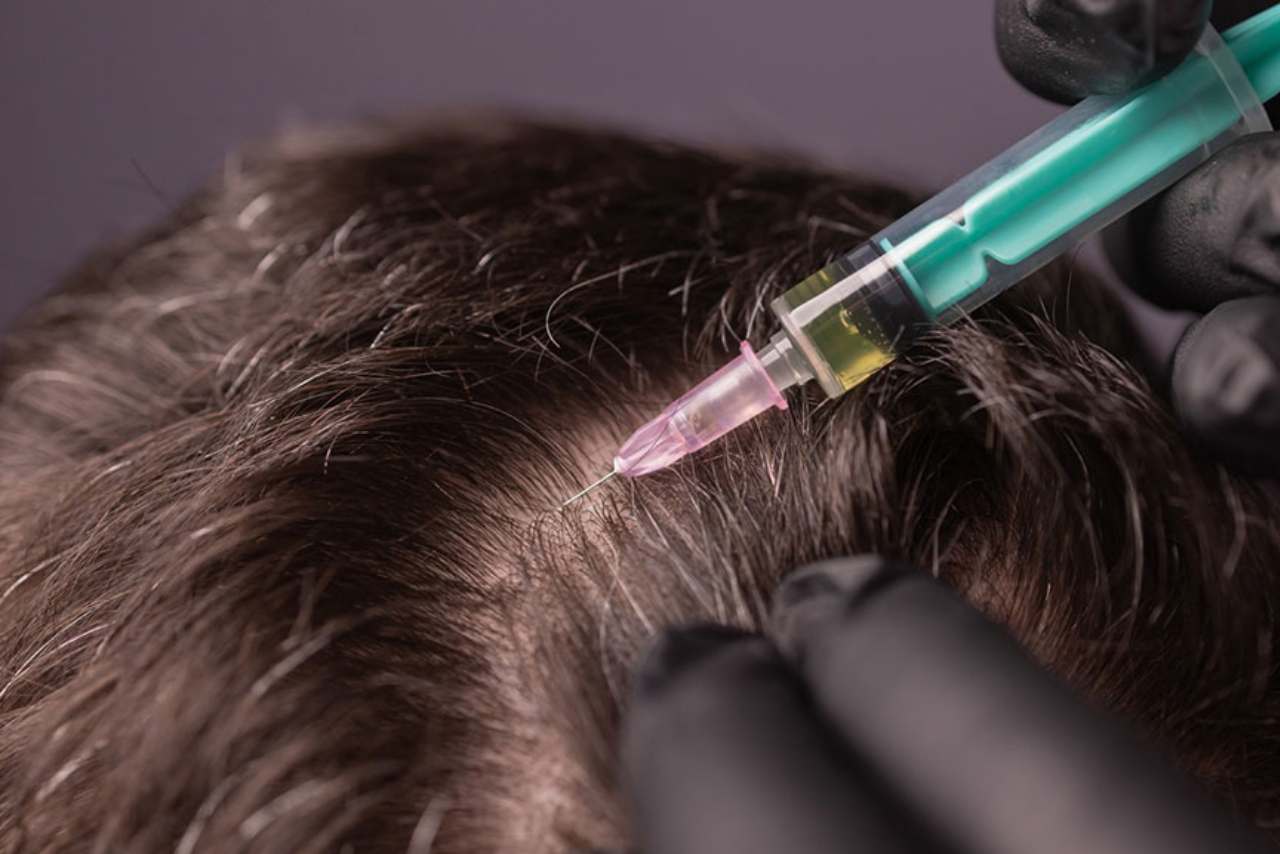

Hair transplants can work very well for people of African/Black descent, but the plan needs to match the way textured (or Afrocentric) hair grows, as the curl you see emerging from the scalp is only part of the story.
Under the skin, many follicles curve like a arch or in a “C” shape. The hairs also tend to exit the scalp at variable angles. These two details change how a surgeon should approach curly-textured hair when harvesting grafts.
At Limmer Hair Transplant Center, the goal is not just to move hair from point A to point B. The goal is to keep the donor area healthy and natural-looking for the long run, especially for patients who like shorter haircuts where any thinning or tiny scars can show more easily.
What makes Afrocentric-textured hair different for hair transplants?
The Follicle Can Curl Under the Skin
A hair follicle is a tiny structure in the scalp that grows hair. In tightly curled hair, that follicle often curves below the surface. The harvesting process during a hair transplant surgery aims to extract intact hair follicles with sharp, predominantly straight blades and needles. Thus, from the surface, the unpredictable and invisible curve to the hair follicle makes harvesting more challenging and can increase the rate of damaged follicles.
The Exit Angle is Often Low
Many patients with textured hair have hair that grows out at a flatter angle. If a surgeon follows only what they see on the surface, they can miss the true path of the follicle under the skin. That can damage the graft and also create extra trauma in the donor area.
The Donor Area Matters Even More with Short Hairstyles
Globally, most harvesting today is done via the FUE (follicular unit extraction) method, which uses a tiny punch tool to remove follicular units (small natural groups of 1 to 4 hairs). Each removal leaves a tiny dot scar. Done correctly, these dots are hard to notice. Done too aggressively, the donor area can look thin and patchy.
How Limmer Helps Prevent Overharvesting and Patchy Donor Scarring
Overharvesting means taking too many grafts from the donor area or taking them in a pattern that leaves obvious thin spots. It is one of the most avoidable problems in hair restoration, but it takes planning and skill to avoid.
1. Mapping the Safe Donor Zone First
Not every hair on the back and sides of the scalp is “safe.” The safe donor zone is the area most likely to grow normally as male pattern hair loss progresses. When a surgeon harvests outside that zone, into areas that are likely to thin with time, the patient may lose some of the remaining hairs, causing the donor area to look thinner than expected.
technique; they need to be spread out enough so that they donor hair removal doesn’t leave obvious gaps or patches.
Our approach starts with a plan that is built around what your hair is likely to do years from now, not just what it looks like today.
2. Spreading Extractions Evenly so no Spot Gets Over-Harvested
One of the best ways to prevent a patchy look is to distribute extractions in an irregular but uniform manner across the donor area. Meaning, you do not harvest only from one section. You spread the work out so the eye cannot pick up a thin stripe or a thin patch.
Black hair tends to exhibit lower density in the donor zone in general, meaning fewer hairs or follicular units are growing per square centimeter. Therefore, it’s even more important for the surgeon to be cognizant of the spacing of excisions with the FUE
3. Limiting Extraction Density Per Session
Even if a patient has strong donor density, there is a point where removal becomes visible. A careful surgeon avoids high-density harvesting in one small area because that is when the donor starts to look see-through.
In our office, the donor plan is designed to stay on the safe side of visibility. This protects patients who wear fades, close cuts, or who may want another procedure later.
In some cases, when patient have very dense hair- above average follicular units per square centimeter- the surgeon needs consider potential collateral damage to nearby hairs that they are not trying to disturb. The true injury would not be known until the donor area is fully healed if unharvested hairs are lost and create bare patches. The same can be true for afrocentric hair when the direction of the curl under the skin is not as predictable.
4. Using Curl-Aware FUE Technique to Reduce Trauma
With Afrocentric hair, the surgeon must respect the curve under the skin. This can affect punch choice, punch motion, and device settings. Many surgeons also do small test grafts first and adjust the approach based on graft appearance.
When the harvesting technique matches the follicle’s path, the grafts come out intact, and the donor area is preserved.
5. Avoiding Large Graft Count
At Limmer Hair Transplant Center, the donor area is treated like a limited savings account. Every graft removed is gone forever, so the right number is the one that gets a natural result while keeping the donor area looking normal but also the potential for a repeat hair transplant in the future. Hair ages just like our skin so our doctors stress to patients that a hair transplant is not “One and DONE,” it’s a lifelong process. To go back to our saving account analogy, if you blow through all the money in your savings account at a young age, you may regret it later.
Scarring Risks in Patients of African Descent
All hair transplants create some scarring, even when done perfectly. The key is keeping scars minimal and subtle.
Some patients of African descent also have a higher risk of raised scars, like hypertrophic scars and keloids. A hypertrophic scar is raised but stays within the original wound area, while a keloid can grow beyond the wound edges and keep expanding.
Keloids after hair transplant are considered uncommon, but they are still worth discussing before surgery, especially if you have had raised scars in the past.
Because of that, we take scarring history seriously. If you have had raised scars before or if you have a family history of keloids, that should be part of the consult and planning.
Curious whether a hair transplant is right for you?
Our doctors have been restoring hair in San Antonio since the 1990s. Get honest answers about your options in a consultation.
Schedule a ConsultationOr call (210) 496-9992
FUT vs FUE for African-Textured Hair: What Matters Most
Both FUT (follicular unit transplantation, or the strip method) and FUE are both perfectly acceptable techniques for harvesting hair follicles, but the “best” method depends on the patient.
FUE avoids a linear scar, which many patients prefer. But FUE in tightly curled follicles can have a higher risk of transections if done without curl-aware technique.
In most patients, the thin linear scar resulting from FUT heals well and is easy to hide with longer hair. This harvesting method allows surgeons to exercise increased caution to not damage follicles; then, graft creation can be performed by patient, well-trained technicians with the assistance of microscopes, an approach that could limit graft damage.
Theoretically, both FUE and FUT can be risky in patients with a strong history of raised or keloidal scarring, so this should be considered as part of a thorough consultation.
The most important factor is not the name of the method; it is whether the surgeon can harvest safely, protect the donor, and place grafts at the right angle so the final hair looks natural for African-textured curl patterns.
Natural Results Start with Angle Control
Angulation refers to the direction the hair grows. If transplanted hairs are placed at the wrong angle, the hair can stick out oddly or look less natural, especially along the hairline.
With Afrocentric hair, correct angle control matters a lot because the natural exit angle can be low and the curl adds volume. When done well, African textured hair can create excellent coverage with fewer grafts because curls add fullness.
African-Textured Hair Transplants in San Antonio at Limmer Hair Transplant Center
If you are considering a hair transplant and you have curly-textured hair, the safest plan is one built around your curl pattern, your follicle direction under the skin, and a donor strategy that avoids overharvesting.
At Limmer Hair Transplant Center, donor protection is not an extra step. It is the foundation of the whole procedure, because results should still look great from the front and back of your head years later.
If you want to talk through your goals, your hairstyle preferences, and your long-term donor plan, we can walk you through what a careful, curl-aware transplant plan looks like for your specific hair type. Contact us today!