Medically reviewed by the physicians at Limmer Hair Transplant Center
There are many different options out there when it comes to hair loss treatment and you don’t always have to undergo surgery in order to help improve your hair loss. And while a hair transplant may seem like the only permanent solution to your hair loss, depending on your condition, medical treatments like Rogaine (Minoxidil) can have incredible results when used properly.
Key Takeaways
- No, Rogaine does not make your hair loss worse. Increased shedding in the first few weeks is a normal, temporary sign that it’s working, not a sign it’s failing.
- The shedding phase typically lasts up to four weeks, with visible improvement starting around four months if you stick with daily use.
- If you stop using Rogaine, any progress reverts back to where it would have been without the medication.
Minoxidil, or as it’s more commonly known as, Rogaine, was the very first and only FDA-approved topical medication for hair growth treatment and has been a game changer in the space ever since. Minoxidil is a topical solution applied directly to the affected area. We know that it dilates blood vessels in the scalp which improve blood flow, but the precise mechanisms on how it promotes hair growth are not completely understood.
While it is very effective in most cases at treating hair loss, many patients have discussed their concerns with us after starting treatment that they are noticing more hair falling out instead of less. That shedding is actually expected, and we’ll explain exactly why below.
What is Rogaine?
Before we get into whether or not Rogaine can actually make your hair loss worse, it’s important to understand what it is and how it works.
Rogaine is a topical medication applied directly to the scalp to help promote hair growth. It comes in the form of a foam or liquid solution.
So how exactly does it work? Thanks to a combination of hormones, hereditary factors and aging, your hair follicles get thinner over time. As your hair follicles shrink, your hair’s growing cycle also becomes shorter. This leads to shorter and finer hair growing in during each hair growth cycle, until there may be no growth at all. The minoxidil in Rogaine works by unknown mechanisms to counteract the shrinking of your hair follicles by extending the growth cycle (anagen phase) and therefore decreasing the shedding cycle of your hair (telogen phase). It also helps to increase the blood flow to the areas of your scalp where your hair grows, thus bringing essential nutrients and oxygen for overall health hair to the scalp where applied.
Though the finer details about how minoxidil actually works are not fully understood, we do know that the medication needs to go through an activation process in your body in order to promote hair growth. Research shows that enzymes in your body have to convert it into minoxidil sulphate, and in that same study, this enzyme activity was higher in men who responded to minoxidil compared to those who did not respond. Unfortunately, we can’t test for these enzymes yet. Interestingly, the study also notes that salicylate, which is found in aspirin, can inhibit sulfotransferase, the enzyme responsible for that conversion.
In regards to side effects, Minoxidil does not affect your hormones like Finasteride, but can Rogaine really make your hair loss worse?
Can Rogaine Make Your Hair Loss Worse?
Even though Rogaine is FDA approved for hair growth, which means clinical trials proved its effectiveness, some people experience more hair loss during the first couple of weeks of using the medication than before. What’s the deal? Well, hair shedding when you first start taking Rogaine is actually a sign that it’s working. But don’t worry, it should only last up to four weeks.
When Rogaine boosts hair growth, it pushes out the smaller finer hairs that were already on their way to being shed. As your thin, fine hairs begin shedding, thicker hairs will soon take their place. It’s important to stick to the plan and continue using Rogaine every day even though it can be nerve-racking watching your hair fall out at the beginning.
If you stop using Rogaine, any progress you make with your hair growth will revert back to where they would be without the medication. As long as you continue to treat your hair with the Rogaine, you should start to see improved hair growth in about four months.
Remember, it takes time to grow your hair naturally. Give Rogaine the time it needs to provide your scalp with thicker and stronger hair.
Not sure what's causing your hair loss?
A proper diagnosis is the first step. Our board-certified doctors can tell you exactly what's going on and what will actually help.
Schedule a ConsultationOr call (210) 496-9992
Does Rogaine Actually Work?
Many studies have shown the effectiveness of Rogaine (Minoxidil) as a treatment for hair loss, including a large-scale clinical trial tracking its effects over time. The International Society of Hair Restoration Surgery (ISHRS) reported that two studies found that the majority of patients who used 5% minoxidil for treating male pattern baldness saw decreased hair loss, a rapid onset of action in promoting new hair growth, and very effective to effective new hair growth results during the treatment period.
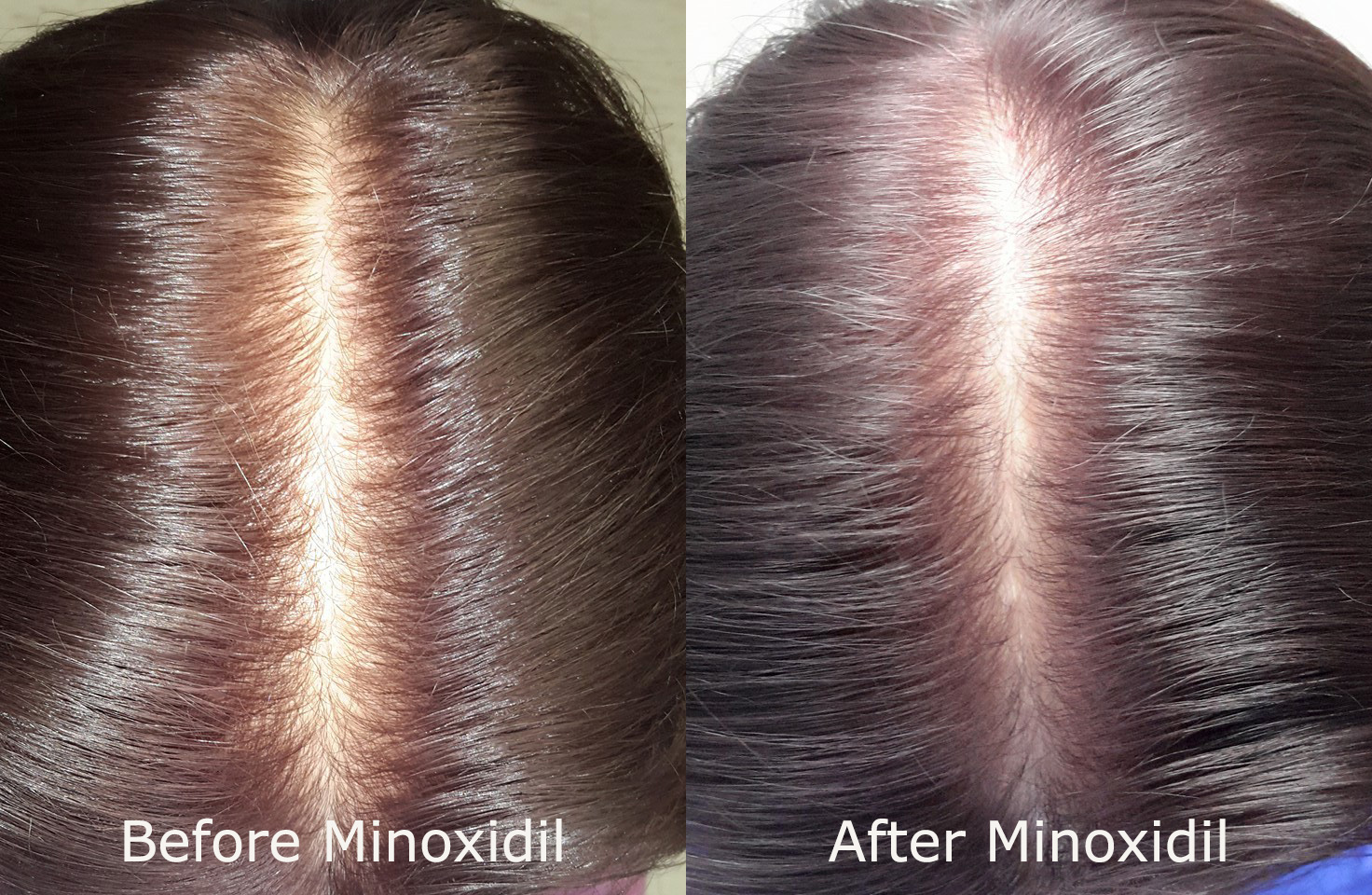
At the Limmer Hair Transplant Center in San Antonio, Texas, many of our patients have seen thicker hair growth after using Rogaine. In the picture above, a female patient was very frightened when she began using minoxidil and experienced hair shedding. But, as you can see, she stuck with her routine of using the medication daily and saw her hair mass index go up four points after just two months of treatment!
So can Rogaine actually make your hair loss worse? Again, the short answer is no. It may seem as though you are losing more hair when you first start the treatment, but as long as you continue with your doctors’ plan, then you should begin to see fuller hair growth within a few months.
Other Medical Hair Loss Treatment Options
In addition to Rogaine (Minoxidil), there are other medical/topical treatment options that can help slow down your hair loss and help to improve hair growth.
Finasteride (which goes by the brand name Propecia or Proscar) is another very popular topical hair loss treatment option.
Unlike minoxidil, which does not target the hormones in your body, Finasteride works by preventing testosterone from being converted into DHT in the prostate, hair follicles and glands. DHT is the active form of testosterone that causes hair loss. By inhibiting DHT, the goal is to help slow down and prevent future hair loss from occurring.
While each of these medicinal hair loss treatments is different, it’s important to discuss with your doctor about which one is right for you. While Minoxidil and Finasteride both have a common end goal, they both work in completely different ways. And while one may work for someone else, it may not be as effective for you. Which is why it is always important to discuss all of the options with your doctor before making a decision.
If neither medication is enough on its own, a hair transplant is a permanent option worth discussing with your doctor, and many patients use medication and surgery together for the best long-term result.
If you’re losing hair and choose not to do medical therapy, like Rogaine, you will most certainly continue to experience hair loss. Don’t hesitate to contact the Limmer Hair Transplant Center to discuss starting Rogaine today. It’s important to monitor your hair regrowth progress with an experienced hair restoration professional to ensure that Rogaine is working for you.
FAQ
Does Rogaine cause more shedding at first?
Yes, and it’s expected. Rogaine pushes out thinner, weaker hairs that were already due to shed, making room for thicker hairs to grow in. This shedding phase is a sign the medication is working, not a sign of worsening hair loss.
How long does Rogaine shedding last?
Typically up to four weeks. Most people begin to see improved hair growth around four months of consistent daily use.
What happens if I stop using Rogaine?
Any progress you’ve made will gradually revert back to where your hair would have been without the medication. Rogaine needs to be used continuously to maintain results.
Does Rogaine affect hormones like Finasteride does?
No. Minoxidil (Rogaine) works locally on the scalp and does not target hormones. Finasteride works differently, by blocking the conversion of testosterone into DHT.