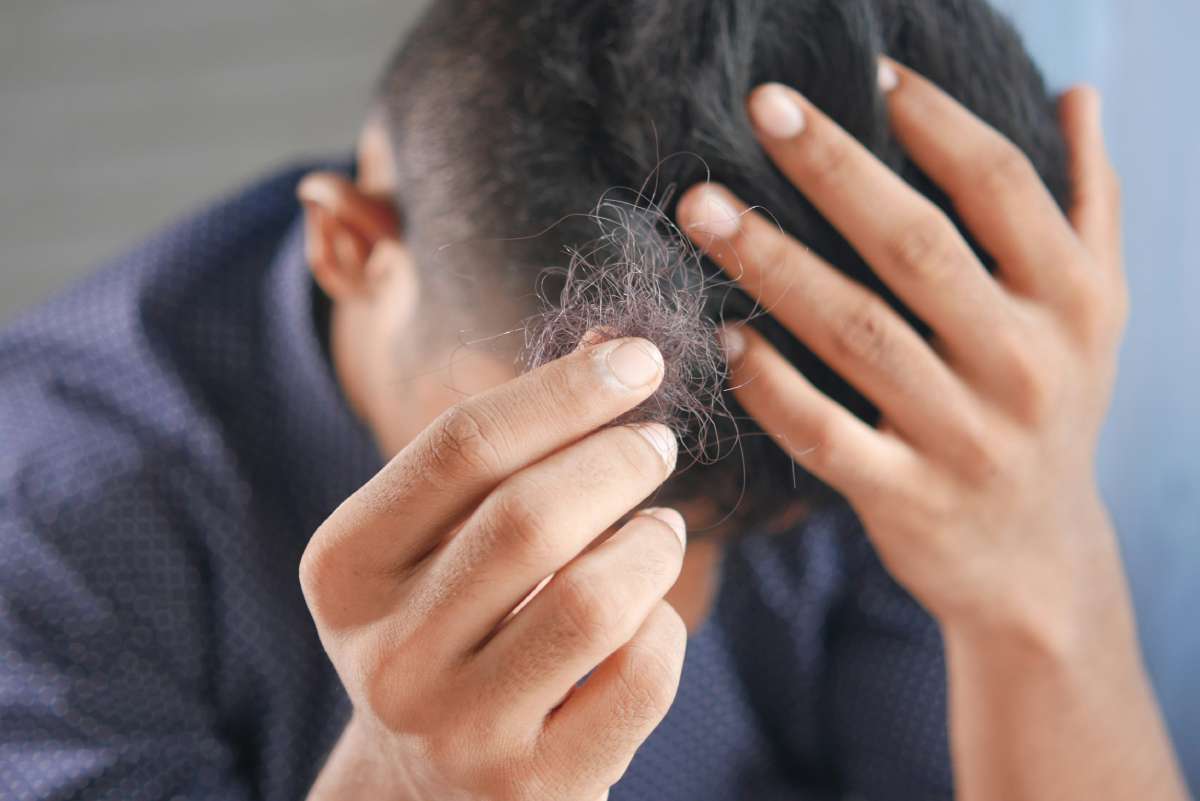
Key Takeaways
- AI now helps plan hair transplants by mapping donor hair, predicting future loss, and creating preview images, but it cannot examine your scalp the way a surgeon can.
- Robotic systems like ARTAS use AI to map and select follicles, yet a trained doctor still guides every step and makes the final call.
- The safest way to use AI is as a starting point for your questions, then confirm everything with an experienced hair restoration doctor in person.
AI is changing hair transplant planning in three main ways: it powers preview tools that show a fuller hairline, it runs software that measures your hair and predicts future loss, and it guides robotic systems during surgery. All of that helps, but none of it replaces a surgeon.
A trained doctor still examines your scalp and builds the plan.
Below, we break down what these tools really do, where they fall short, and how to use them without getting misled.
What Does AI Actually Do in Hair Transplant Planning?
AI shows up in three places. It creates preview images that let you see yourself with more hair, it runs software that measures density and predicts future loss, and it guides robotic tools that map and select follicles during surgery.
Each of these assists the doctor, but none of them replaces the doctor’s judgment.
AI Hairline Simulators
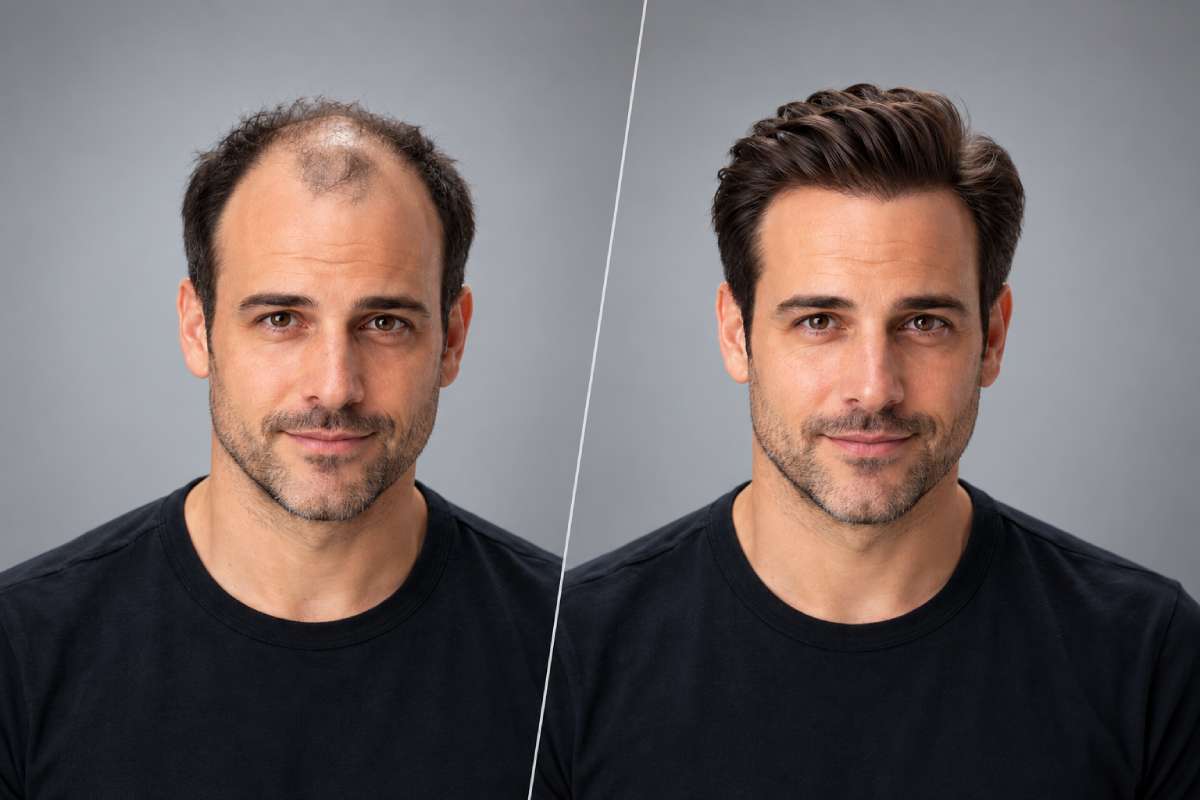
You upload a selfie, and in about 30 to 60 seconds the tool shows a photo of you with more hair. Most let you adjust the hairline shape, the thickness, and even the color. These simulators are easy to find online, and many of them are free.
The previews can feel convincing, and that is exactly the catch. Seeing a stranger’s before-and-after is abstract, but seeing your own face with a full hairline is not, so it is easy to trust the image more than you should.
Read the fine print first.
One popular tool openly calls itself “a sales tool rather than a clinical prediction tool,” which means the picture shows what is possible, not what you will actually get. So, definitely be wary of these tools and the results they display. It’s important to manage expectations when getting a hair transplant.
Donor Mapping and Loss-Prediction Software
Other software measures your hair up close, plotting how dense it is and spotting follicles that are starting to shrink. That shrinking is called miniaturization, which is just hair getting thinner and weaker over time. Catching it early helps a doctor plan around loss that has not fully shown up yet.
This software can also warn a doctor when a plan would pull too much hair from the donor area. The donor area is the back and sides of your scalp, where healthy hair is harvested, and protecting it matters because that supply has to last a lifetime.
AI-Guided Robotic Systems
Robotic tools like the ARTAS system, a robot that harvests hair follicles, use AI during the procedure itself. Its camera studies your scalp in fine detail, checking each follicle up to 60 times per second and reading the angle, depth, and density of your hair before it helps pick the healthiest follicles to move.
Studies report the system spots follicles with roughly 90 to 97 percent accuracy, and it can even help create the tiny sites where new hair goes.
Even so, a doctor still sets the plan and watches every step, because the robot follows instructions rather than making the artistic decisions. So while the “AI” can help with determining which follicles might be good for excising, it’s still just a tool that the doctor references when making the decision.
How Are Patients Using AI Before Their Consultation?
More and more patients now research with AI before they ever call a clinic, using chatbots to explain terms, compare methods, and build a list of questions. That preparation helps them walk in ready, but it does not always help them walk in correct.
The scale of this shift is real. An April 2026 Gallup poll found that about one in four U.S. adults, roughly 66 million people, have used an AI tool for health information, and among recent users, 59 percent turned to it before a doctor visit. Most said they simply wanted quick answers in plain language.
Hair loss fits that pattern perfectly, because it is personal, costly, and packed with confusing terms like FUE, DHI, and graft survival that a chatbot can translate in minutes. If you want to understand your stage of loss, the Norwood scale is a good place to start, and if you are weighing techniques, our guide on FUE vs. FUT breaks down the real differences.
Where Does AI Fall Short in Hair Transplant Planning?
For all its usefulness, AI has real limits. It can sound confident and still be wrong, and it cannot feel your scalp, measure your true donor supply, or predict how your hair loss will move over the years. Those gaps matter more than most patients expect.
- It can make things up. Chatbots sometimes deliver confident answers that are simply wrong, a problem researchers call hallucination. In one JAMA Oncology study, more than a third of a chatbot’s cancer treatment tips did not match medical guidelines, and the same risk applies here: a chatbot can invent a graft survival number or suggest a method your surgeon would never choose for your case.
- It cannot examine you. A preview has no way to see your donor density, your scalp elasticity, or your shrinking follicles. A 25-year-old with fast, extensive loss might walk away from a simulator with a full-hair image and expectations that ignore what his hairline will be doing at 35 – 45 – 55 and beyond.
- It raises privacy questions. Uploading a clear photo of your face means handing over biometric data. Some tools delete those images soon after use, while others are vague about it, so read the privacy policy before you upload anything.
Curious whether a hair transplant is right for you?
Our doctors have been restoring hair in San Antonio since the 1990s. Get honest answers about your options in a consultation.
Schedule a ConsultationOr call (210) 496-9992
Does Limmer HTC Use AI in Hair Transplant Planning?
At Limmer Hair Transplant Center in San Antonio, the plan starts with a doctor, not a machine. Our team may use preview images to help you picture a goal, but the real evaluation always happens in person, where a physician examines your scalp and donor hair firsthand.
This approach fits our history. Dr. Bobby Limmer pioneered follicular unit transplantation in the early 1990s. That method moves natural groups of one to three hairs, and it is still the base of every modern transplant.
Good results have always come from a skilled doctor working like an artist. AI can support that work, but it cannot copy the trained eye and hands behind it.
Our physicians, including Dr. Jennifer Krejci and Dr. Allison Limmer Sherwood, plan each case around your real anatomy and your long-term goals.
| What You Want to Know | AI Tool | In-Person Consultation |
| Preview of a fuller hairline | Fast and free, but illustrative only | Realistic goal based on your own hair |
| Your true donor hair supply | Cannot measure it | Measured during a scalp exam |
| How your loss will progress | Rough guess at best | Judged by an experienced doctor |
| Your final surgical plan | Not possible | Planned and executed by your surgeon |
What Questions Should You Bring From AI to Your Consultation?
AI works best as preparation, not as a verdict, so bring what it gave you and let a doctor pressure-test it. These four questions turn a chatbot session into a productive visit:
- How much usable donor hair do I really have for my goal?
- Is my hair loss likely to keep moving, and how does that change the plan?
- Which method fits my case, and why, FUE or FUT?
- Is the hairline in my AI preview realistic for my age and pattern?
Frequently Asked Questions
Can AI tell me if I am a good candidate for a hair transplant?
AI can offer general guidance, but it cannot confirm whether you are a good candidate, because that answer depends on your donor hair supply, your scalp health, and how your hair loss is moving. Only an in-person exam can measure those things. Use AI to prepare your questions, then let a hair restoration doctor make the real call.
Are AI hair transplant simulators accurate?
AI simulators show what a fuller hairline could look like, not what you will actually get, and they cannot see your donor density, the texture of your hair or scalp condition. Many of the makers even describe them as sales tools rather than medical predictions. Treat the preview as a way to share your goal with a surgeon, not as a promise of results.
Does Limmer HTC use robotic or AI hair transplant technology?
At Limmer Hair Transplant Center, an experienced physician leads every plan and procedure. We may use preview images to help you picture a goal, but the core evaluation is always done in person. Our approach builds on Dr. Bobby Limmer’s original follicular unit method and the trained judgment behind it.
Will AI replace hair transplant surgeons?
No. AI can map follicles, show previews, and answer questions, but it cannot examine your scalp or make the final surgical choices. Robotic tools like ARTAS still need a doctor to set the plan and guide the work, so AI supports the surgeon rather than taking the surgeon’s place.
In fact, the Drs at Limmer HTC have moved away from using robotically assisted transplant and prefer a manual excision device that works through blue-tooth connected pedal, handpiece and tablet. They can control the speed, rotation, power, and oscillation of the tiny harvest needles with a touch of a screen. Still very high-tech but much more compact and allows for much more flexibility in how and where the grafts can be harvested. For now, the robot still has limitations that have not surpassed the abilities of the physician’s body to maneuver around a patient’s scalp, beard or body during hair transplantation.
Is it safe to upload my photo to an AI hair simulator?
It can be, but read the privacy policy first, because a clear photo of your face counts as biometric data. Some tools delete those images soon after use, while others store or share them with little explanation. If a tool does not spell out how it handles your photo, it is safer to skip it or ask before you upload.
Plan Your Hair Restoration With People, Not Just Pixels
AI can help you learn and prepare, but it cannot examine your scalp or promise a result, and for that you need an experienced team. Our doctors have been restoring hair in San Antonio since the 1990s.
See our honest hair transplant pricing, then schedule a consultation to get a real plan built around your goals.